What Sheaf is
Running your agents is the easy part. Governing them is the operating system.
Plenty of tools will orchestrate a fleet of AI agents, Sheaf's own engine among them. An operating system does the harder thing: it decides what those agents are allowed to do. Before an action goes through, Sheaf measures whether the agents reasoned about a consistent picture of the world or quietly contradicted each other, and holds the action when they did. It works over the agents you already run, whoever orchestrates them, and answers with a real number, not a vibe.
The layer
Sheaf sits between your agents and the actions they take, running on Sheaf or on your own stack, and decides what proceeds.
The proof
Every decision it passes carries a genuine coherence certificate; every one it holds shows exactly where the agents diverged.
Where it came from
Don't trust one AI. Ask several — and measure the disagreement.
The starting instinct was simple: one model's answer is a guess with a confident voice. Ask several strong models the same thing and the agreement tells you something the single answer never could, and so does the disagreement. Asking is easy; the measuring is the hard part, and the valuable one.
So we built the measurement properly, on the branch of mathematics designed for exactly this — gluing local views into a global one, and detecting when they can't be glued. That's sheaf theory. The obstruction to a consistent global picture is a real, computable quantity: the H¹ inconsistency index. It catches contradictions that pairwise agreement hides.
Why it matters now
Why it became an operating system
When AI only answered questions, coherence was nice to have. Now agents act — they pull records, price things, submit forms — and the same measurement becomes essential: you need to stop the action that shouldn't happen, and prove the reasoning behind the ones that did. Governing that is an operating system's job, and that is what Sheaf is today: the coherence layer for agentic AI.
What we believe
How we think about the work
- Measurement over assertion. A number you can check beats a claim you have to take on faith. Everything Sheaf outputs is meant to be verifiable.
- Honest limits. We're precise about what Sheaf verifies and how, and we say it plainly — an instrument that overclaims is worse than none.
- Rigor as the moat. The math is real and published, not decoration. It's what lets a risk officer sign the certificate and a regulator accept it.
Leadership
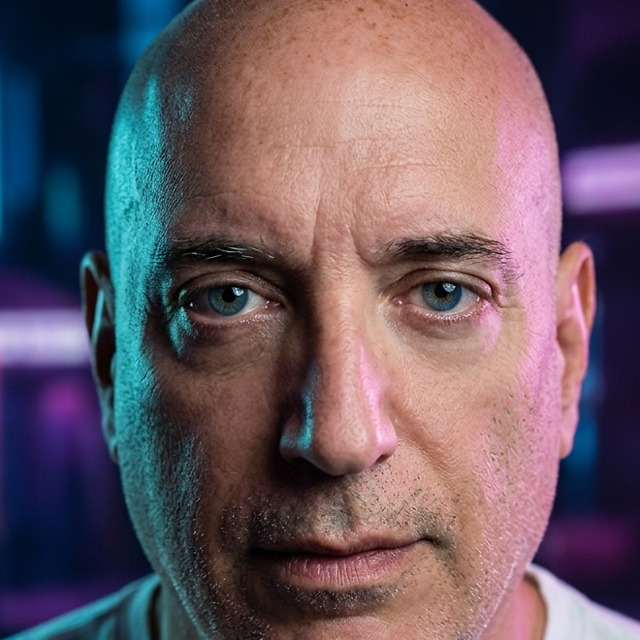
Jack Widman, PhD
Jack founded Sheaf on a conviction and a habit of mind. The conviction: you can't trust an AI's answer on faith — you have to be able to measure whether its reasoning holds together, and that's a mathematical question, not a matter of opinion. The habit: he's drawn to the places where deep, theoretical mathematics turns out to be exactly the tool a practical problem needs. Sheaf is where the two meet: the coherence layer for agentic AI, its coherence measured with sheaf theory and cohomology, the kind of topology he's spent his career in. He holds a PhD in mathematics (topology) and has spent many years building software. Today his work is Sheaf; alongside it, he stays active in research as an affiliated researcher in the foundations of computer science at Ben-Gurion University.

Phil Grady
Phil has spent his career doing the hard part of what Sheaf now faces: turning a rigorous, new measure into a market. He's a venture builder who has taken businesses from a blank page to category leadership and exit — most notably Castlight Financial, which he founded and grew into one of the UK's leading affordability fintechs. What he built there is structurally close to Sheaf's task: a new market category, made by combining open-banking data with credit information, and a score the industry didn't have — then the patient work of getting the institutions that gate trust to accept it. Castlight was founded on making a safer financial world; Sheaf extends that philosophy into agentic AI. Today his work is Sheaf; alongside it he advises and operates across a portfolio of growth-stage companies.